Turn goals into acceptance conditions
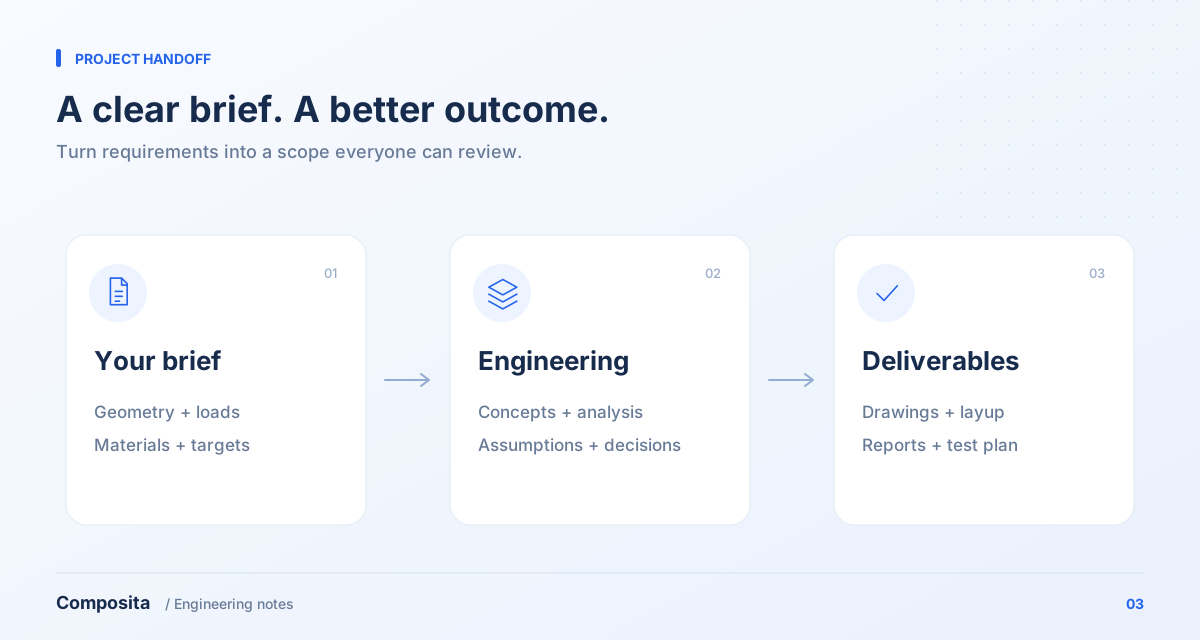
Lighter and stronger describes an ambition, not a scope of work. Identify current mass, available space, loads, allowable deformation and operating environment. When values are unknown, list the questions that an initial assessment must resolve.
A bracket redesign can be divided into load definition, concept development, comparative analysis, process selection and drawing preparation. Give each stage an input and a deliverable so the schedule and budget correspond to actual work.
Prepare a revision-controlled package
Supply readable CAD and relevant drawings with units, revisions, protected regions, interfaces and critical tolerances. Photographs explain assemblies but do not replace dimensions. Include the conditions and settings behind any existing simulation or test data.
- Geometry: parts, assembly, interfaces and revision.
- Loads: magnitude, direction, location, frequency and source.
- Materials: candidates, supplier data and test conditions.
- Manufacturing: quantity, available processes, finish and tolerances.
- Acceptance: displacement, mass, strength or test criteria.
- Project: target schedule, budget range and decision owner.
Separate design, simulation and production scope
Agree on concept count, load cases and revision rounds. Establish whether material characterization, coupons, tooling and prototypes are included. Adding impact analysis or changing the production process can change both the scope and the schedule.
Specify deliverable formats for models, solver files, reports, drawings and layup data, together with permitted data use. Simplified geometry may support an initial confidential discussion, but detailed analysis needs sufficient information.
Use milestones to reduce rework
For an uncertain project, start with a data-gap review before concept comparison and detailed analysis. Record assumptions, confirmed decisions and remaining questions at each milestone. This helps avoid a late discovery that material is unavailable or an interface cannot change.
For an initial Composita discussion, share the component purpose, the main constraint and the information already available. These help define an appropriate engineering scope; feasibility, pricing and delivery dates depend on the assessment.
References & further reading
Bring your engineering question.
Discuss material selection, structural design and analysis for your component with Composita.